Christian Hehnel
Sound vs. Shahed
Sound vs. Shahed
The White House and the Iranian regime have agreed to a two-week suspension of hostilities in a conflict that has been fueling the global drone paradigm.
The White House and the Iranian Regime have suspended their mutual hostilities for two conditional weeks. This agreement has, for now, resolved a conflict that has been fuelling the global drone paradigm. In this paradigm, attacking entities retain an advantage as long as the cost asymmetry remains between loitering munitions and C-UAS solutions.
Predating the ceasefire, tensions burst on 28 February 2026 as US and Israeli forces launched airstrikes across Persia. Following the region's ignition, the Iranian Regime launched a counterattack targeting bordering adversaries and hostile neighbours. While some Gulf states report UAS interception rates upwards of 90%, these figures only appear reassuring when perceived in isolation. In a broader perspective, Israeli intelligence officials estimate, that the Iranian Regime's stockpile holds more than 10000 Shahed drones.
Elaborating this perspective to encompass the Russo-Ukrainian war, reports suggest that the Russian supply chain may have a monthly production capacity of 5000 Shahed drones. Given these large estimates, a 90% UAS interception rate no longer appears as reassuring as initially perceived.
Drone Induced Cost Asymmetry
Loitering munitions, such as the Iranian Shahed-136, have a unit cost in the low thousands (EUR). In contrast, advanced detection and interception systems may set back defenders millions (EUR) per set-up. As long as this cost disparity remains, attacking entities retain a significant economic advantage. Consequently, deploying highly advanced interceptors and detectors to counter every incoming threat becomes unsustainable.
Nevertheless, novel solutions for solving this equation have emerged from the Russo-Ukrainian War. These solutions are increasingly recognised for their low-cost efficiency.
From Ukraine to the Middle East
As demonstrated by the Ukrainian Sky Fortress, more than 10000 different acoustic sensors have been installed across the nation. This sound-based technology has proven to be a cost-effective alley for UAS detection, enabling advanced systems to be cued rather than burning premium assets on every contact.
In Denmark, BSS has, in close collaboration with the Danish Defence, developed the Komodo, a C-UAS solution building upon biologically inspired threat-detection capabilities found in lizards.
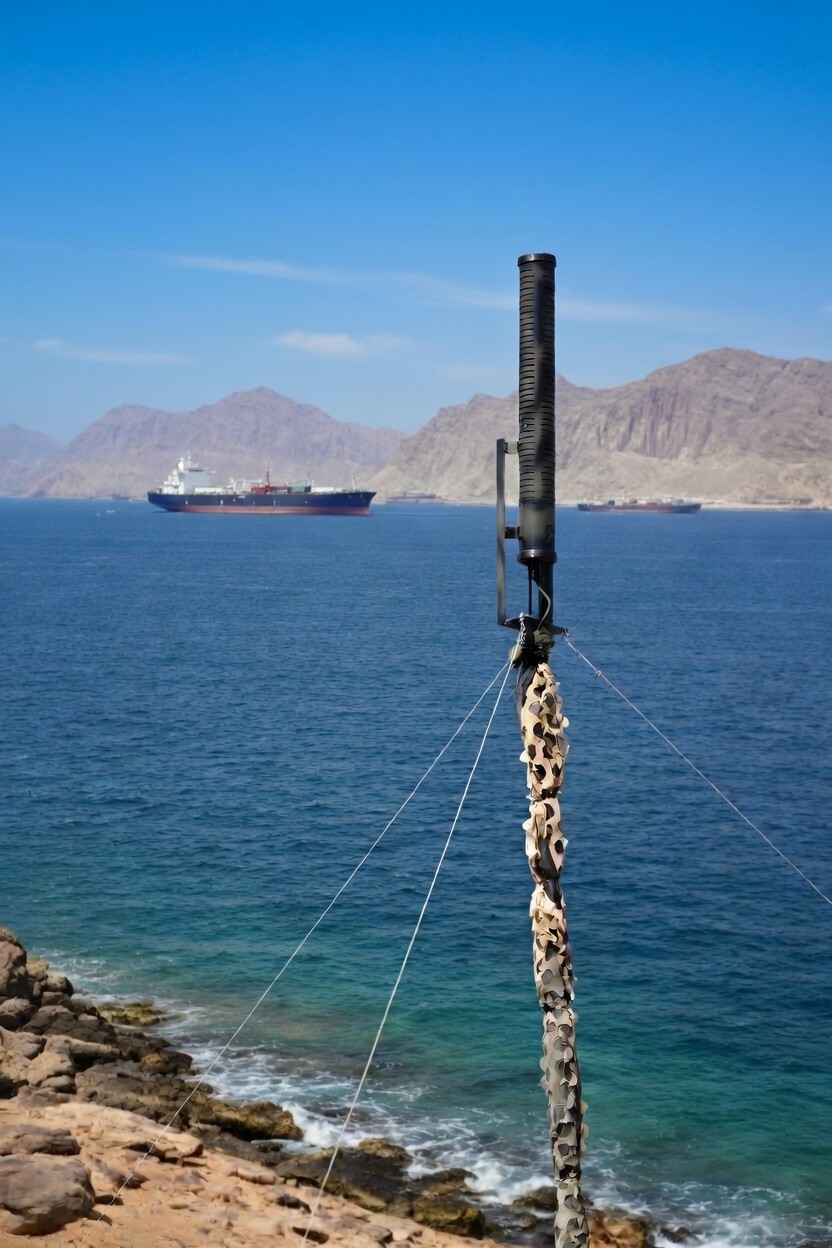
The Komodo is a low-cost passive acoustic UAS sensor capable of listening, identifying, and locating drones based on sound patterns. BSS' C-UAS solution can also integrate with C2 platforms and layered defence architectures to fill gaps and cue effectors or active sensors without sacrificing coverage or revealing detector positions.
Trials with NATO
Alongside the Danish Defence, BSS has participated in numerous NATO exercises over the past several years. And scheduled for this summer, a large-scale exercise will take place in Denmark involving multiple UAS detection and mitigation systems.
During this exercise, a networked array of BSS' Komodo sensors will be deployed to detect and localise UAS in 3D, providing accurate coordinates to cue other participating systems.
In practice this entails delivering geospatial information to e.g. IR/EO detectors as well as kinetic effectors.
For questions regarding BSS Komodo, please see our contact page.
The White House and the Iranian regime have agreed to a two-week suspension of hostilities in a conflict that has been fueling the global drone paradigm.
The White House and the Iranian Regime have suspended their mutual hostilities for two conditional weeks. This agreement has, for now, resolved a conflict that has been fuelling the global drone paradigm. In this paradigm, attacking entities retain an advantage as long as the cost asymmetry remains between loitering munitions and C-UAS solutions.
Predating the ceasefire, tensions burst on 28 February 2026 as US and Israeli forces launched airstrikes across Persia. Following the region's ignition, the Iranian Regime launched a counterattack targeting bordering adversaries and hostile neighbours. While some Gulf states report UAS interception rates upwards of 90%, these figures only appear reassuring when perceived in isolation. In a broader perspective, Israeli intelligence officials estimate, that the Iranian Regime's stockpile holds more than 10000 Shahed drones.
Elaborating this perspective to encompass the Russo-Ukrainian war, reports suggest that the Russian supply chain may have a monthly production capacity of 5000 Shahed drones. Given these large estimates, a 90% UAS interception rate no longer appears as reassuring as initially perceived.
Drone Induced Cost Asymmetry
Loitering munitions, such as the Iranian Shahed-136, have a unit cost in the low thousands (EUR). In contrast, advanced detection and interception systems may set back defenders millions (EUR) per set-up. As long as this cost disparity remains, attacking entities retain a significant economic advantage. Consequently, deploying highly advanced interceptors and detectors to counter every incoming threat becomes unsustainable.
Nevertheless, novel solutions for solving this equation have emerged from the Russo-Ukrainian War. These solutions are increasingly recognised for their low-cost efficiency.
From Ukraine to the Middle East
As demonstrated by the Ukrainian Sky Fortress, more than 10000 different acoustic sensors have been installed across the nation. This sound-based technology has proven to be a cost-effective alley for UAS detection, enabling advanced systems to be cued rather than burning premium assets on every contact.
In Denmark, BSS has, in close collaboration with the Danish Defence, developed the Komodo, a C-UAS solution building upon biologically inspired threat-detection capabilities found in lizards.
The Komodo is a low-cost passive acoustic UAS sensor capable of listening, identifying, and locating drones based on sound patterns. BSS' C-UAS solution can also integrate with C2 platforms and layered defence architectures to fill gaps and cue effectors or active sensors without sacrificing coverage or revealing detector positions.
Trials with NATO
Alongside the Danish Defence, BSS has participated in numerous NATO exercises over the past several years. And scheduled for this summer, a large-scale exercise will take place in Denmark involving multiple UAS detection and mitigation systems.
During this exercise, a networked array of BSS' Komodo sensors will be deployed to detect and localise UAS in 3D, providing accurate coordinates to cue other participating systems.
In practice this entails delivering geospatial information to e.g. IR/EO detectors as well as kinetic effectors.
For questions regarding BSS Komodo, please see our contact page.
The White House and the Iranian regime have agreed to a two-week suspension of hostilities in a conflict that has been fueling the global drone paradigm.
The White House and the Iranian Regime have suspended their mutual hostilities for two conditional weeks. This agreement has, for now, resolved a conflict that has been fuelling the global drone paradigm. In this paradigm, attacking entities retain an advantage as long as the cost asymmetry remains between loitering munitions and C-UAS solutions.
Predating the ceasefire, tensions burst on 28 February 2026 as US and Israeli forces launched airstrikes across Persia. Following the region's ignition, the Iranian Regime launched a counterattack targeting bordering adversaries and hostile neighbours. While some Gulf states report UAS interception rates upwards of 90%, these figures only appear reassuring when perceived in isolation. In a broader perspective, Israeli intelligence officials estimate, that the Iranian Regime's stockpile holds more than 10000 Shahed drones.
Elaborating this perspective to encompass the Russo-Ukrainian war, reports suggest that the Russian supply chain may have a monthly production capacity of 5000 Shahed drones. Given these large estimates, a 90% UAS interception rate no longer appears as reassuring as initially perceived.
Drone Induced Cost Asymmetry
Loitering munitions, such as the Iranian Shahed-136, have a unit cost in the low thousands (EUR). In contrast, advanced detection and interception systems may set back defenders millions (EUR) per set-up. As long as this cost disparity remains, attacking entities retain a significant economic advantage. Consequently, deploying highly advanced interceptors and detectors to counter every incoming threat becomes unsustainable.
Nevertheless, novel solutions for solving this equation have emerged from the Russo-Ukrainian War. These solutions are increasingly recognised for their low-cost efficiency.
From Ukraine to the Middle East
As demonstrated by the Ukrainian Sky Fortress, more than 10000 different acoustic sensors have been installed across the nation. This sound-based technology has proven to be a cost-effective alley for UAS detection, enabling advanced systems to be cued rather than burning premium assets on every contact.
In Denmark, BSS has, in close collaboration with the Danish Defence, developed the Komodo, a C-UAS solution building upon biologically inspired threat-detection capabilities found in lizards.
The Komodo is a low-cost passive acoustic UAS sensor capable of listening, identifying, and locating drones based on sound patterns. BSS' C-UAS solution can also integrate with C2 platforms and layered defence architectures to fill gaps and cue effectors or active sensors without sacrificing coverage or revealing detector positions.
Trials with NATO
Alongside the Danish Defence, BSS has participated in numerous NATO exercises over the past several years. And scheduled for this summer, a large-scale exercise will take place in Denmark involving multiple UAS detection and mitigation systems.
During this exercise, a networked array of BSS' Komodo sensors will be deployed to detect and localise UAS in 3D, providing accurate coordinates to cue other participating systems.
In practice this entails delivering geospatial information to e.g. IR/EO detectors as well as kinetic effectors.
For questions regarding BSS Komodo, please see our contact page.